Case study
Kodeify
Terminal-inspired portfolio template with MDX support, motion animations, and theme control using next-themes.
 next
next typescript
 motion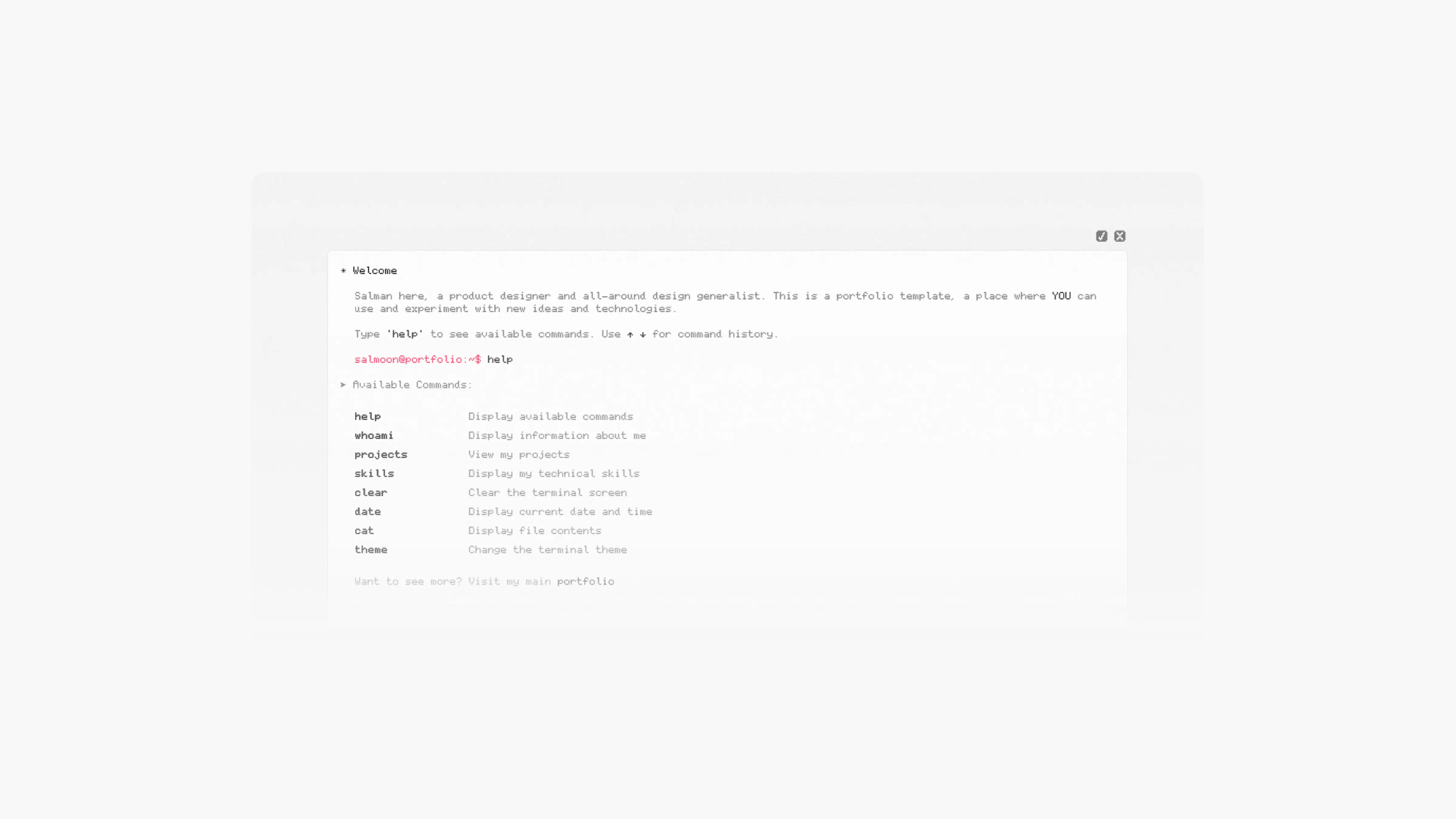
 Github
Overview
Kodeify is a portfolio template for developers who want a minimal, expressive way to present their work. It is lightweight, responsive, and built with Next.js, TypeScript, and Motion.
Content is written in MDX, so you can mix Markdown with React components, and theming is handled with next-themes.
The interface behaves like a small shell. You type commands such as help, about, or projects, use the arrow keys for history, Tab for autocomplete, and other useful commands.
Highlights
Theming and customization
- Uses
next-themesfor light, dark, or custom themes - Color system based on CSS variables and Tailwind tokens
- Layout and sections are structured as a reusable template
Terminal interaction
- Typing and output animations powered by Framer Motion
- Command-based navigation, including
about,projects,contact,help,clear - Built-in tab completion for faster command entry
- History navigation with the up and down arrows
MDX driven content
- Each main section is defined in MDX
- Markdown and React components can be combined cleanly
- Ideal for portfolio content, project documentation, or notes
Performance
- Works with static export or incremental builds
- Deploys cleanly on Vercel or any static host
Learnings
- Small, predictable motion can feel more immersive than heavy animation
- MDX works well for combining code and content in a portfolio
- Early planning of theme structure simplifies customization later
Next steps
- Expand configuration options for commands and sections
- Improve accessibility and reduced motion support
- Add optional analytics or GitHub data integration
Kodeify is meant to be a clean starting point.
You can clone it, replace the content, and keep the same familiar terminal experience.